
A prediction-market partnership can give an organization distribution. The operator question is what happens after the audience arrives.
On September 15, 2026, Kalshi announced a partnership with the U.S. Hispanic Chamber of Commerce (USHCC) to provide training and risk-management resources for entrepreneurs. Axios reported that the organization represents more than five million businesses through more than 260 local chambers.
The announcement matters beyond one partnership. It shows prediction markets moving through professional communities, associations and media networks. For an operator, the strategic decision is not only how to distribute a market. It is whether the audience should stay inside someone else’s venue or become the foundation of a product the operator owns.
Distribution is valuable. Ownership is different.
A chamber, newsletter or media company can introduce an audience to prediction markets without building the underlying technology. That is useful when the goal is education, experimentation or a one-off campaign.
But distribution and ownership create different outcomes:
| Question | Distribute an existing venue | Operate your own venue |
|---|---|---|
| Who selects the catalogue? | The platform | Your editorial or community team |
| Where does the audience return? | A third-party domain | Your brand and domain |
| What can you tailor? | The available markets and rules | Questions, categories, language and experience |
| What is the economic relationship? | Referral or partnership terms | A configured fee on trading activity |
Neither model is automatically right. Sending people to an established venue can be the fastest way to test interest. Owning the destination makes more sense when the audience, questions and recurring distribution are part of your business.
The operating decision is bigger than a partnership announcement
Before turning a partnership into a market program, answer five questions:
- Which audience has a reason to return? A professional community needs a recurring set of decisions, not only curiosity about a new product.
- Which questions are worth trading? Define a measurable outcome, a deadline and a source that participants can check.
- Who owns the market experience? Decide whether the market should live on a third-party platform or under your domain, brand and language.
- How will the economics work? Separate sponsorship or education revenue from trading-fee revenue, and model realistic activity instead of assuming every member trades.
- What responsibilities remain yours? Market rules, moderation, support, distribution and local legal obligations still need an owner.
The last question is easy to skip. It should not be. A written answer from the UK Parliament, published September 8, 2026, says operating prediction markets in Great Britain requires authorization from the Gambling Commission and classification as a betting intermediary. That is one jurisdictional example, not universal legal advice. An operator must check the rules that apply to its audience and business.
What an owned venue changes
An owned venue lets the operator connect distribution to a product loop:
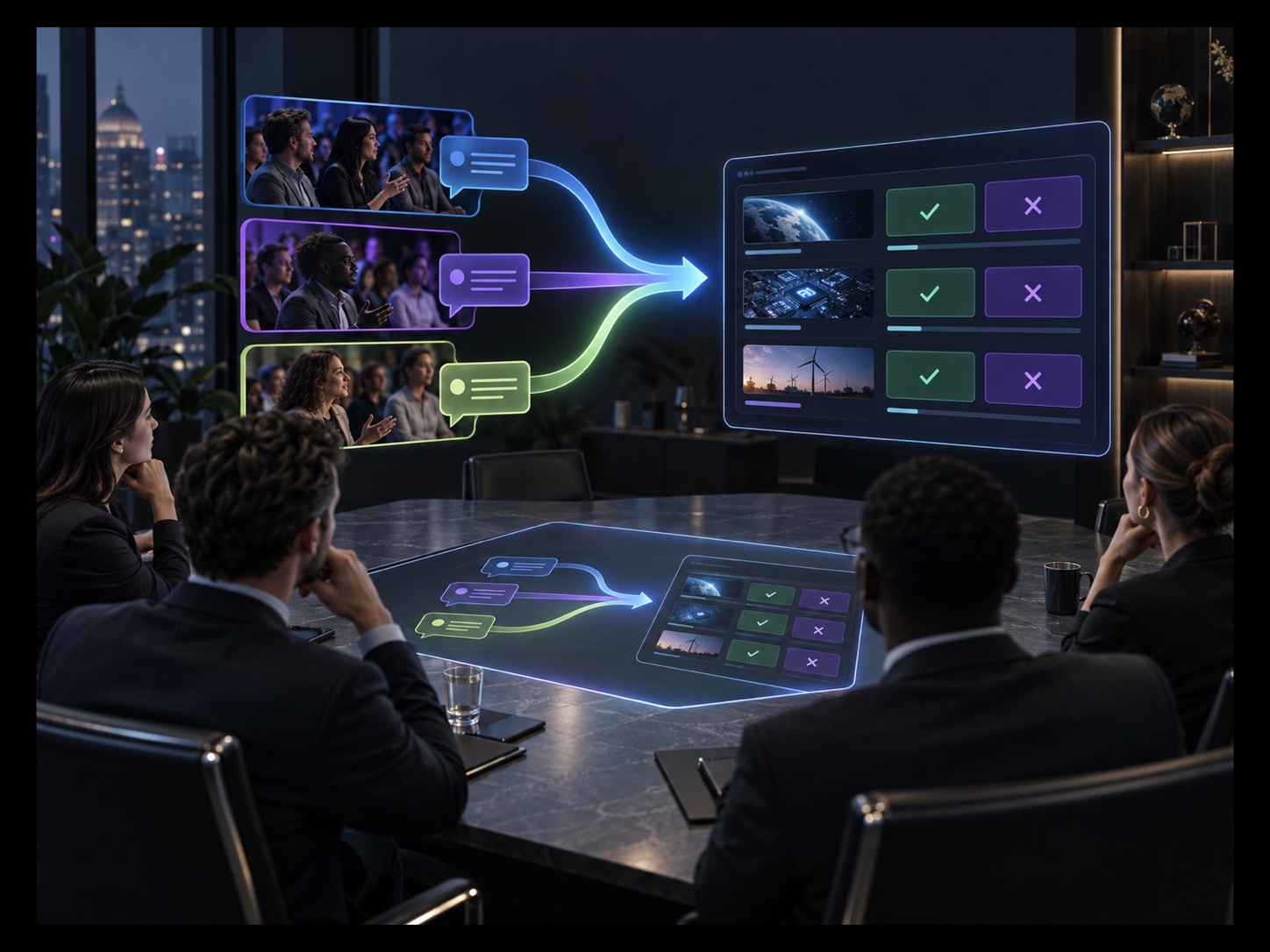
audience → question → market → trading activity → return visit
That loop is stronger when the questions come from conversations the operator already understands. A business association can focus on economic and policy questions. A specialist publication can build a catalog around its beat. A creator community can turn recurring debates into clearly resolved markets.
Kuest is built for the operator who wants that layer without assembling an exchange from scratch. You can choose a category, create custom questions, add your brand and domain, configure a 0.5%–3% trading fee paid to the operator wallet, and optionally mirror active Polymarket markets with shared liquidity. Kuest handles the infrastructure so the launch can be no-code and free to start.
Shared liquidity helps with the cold-start problem: a new venue does not have to look empty on day one. It does not remove the operator’s responsibility to choose useful questions, explain rules, support participants or follow applicable requirements. It gives the operator a better starting point for the product it actually owns.
A practical checklist for professional operators
Use the partnership as a prompt to make a concrete plan:
- Write the audience and its recurring decisions in one sentence.
- Select three pilot questions with a named resolution source and closing date.
- Decide what belongs under your brand and what can remain a distribution link.
- Model conservative trading activity at more than one fee rate.
- Assign owners for rules, support, moderation and jurisdiction review.
- Decide what evidence will tell you to expand, pause or change the catalog.
The partnership may bring new people to prediction markets. Your operating model determines whether those people become a durable audience for your business.
The Kalshi–USHCC announcement is a distribution signal. For operators, the next decision is ownership: who chooses the questions, controls the experience and earns when the audience trades?