Insights from the protocol
Field notes on prediction markets, protocol launches, and what we learn building white-label infrastructure for institutions.

Before You Send Traffic: A First-Screen Checklist for Your Prediction Market Site
A practical review for operators: finish the launch connections, check what visitors see first, and test the path from your audience to a relevant market.
Read article
What the Kalshi–USHCC Partnership Means for Prediction-Market Operators
The Kalshi–USHCC partnership shows how prediction markets can enter professional communities. Learn what operators should decide before turning distribution into an owned venue.
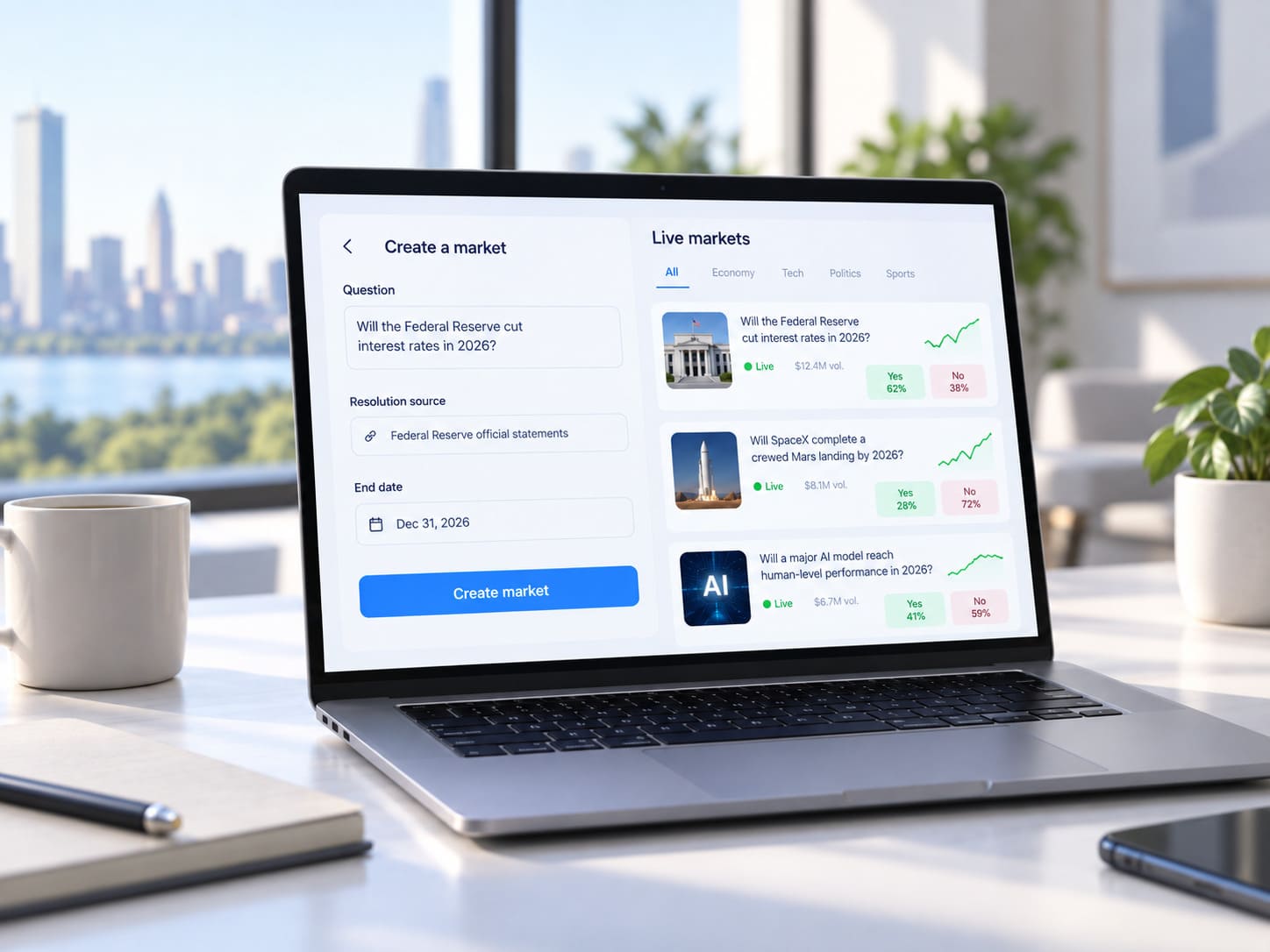
How to Create a Market on Polymarket in 2026: Can You Create Your Own Questions?
Can you create your own market on Polymarket? Learn how market proposals work — and how to launch your own prediction market, create custom questions and earn trading fees.

Where to Find Market Making Opportunities in Emerging Prediction Markets (Before They Scale)
Learn where to find market making opportunities in crypto, how to screen early-stage prediction market liquidity, and how Kuest gives market makers defined campaigns across operator and mirror markets.

Becoming a Liquidity Provider for Prediction Markets: Risk, Escrow, and Yield Explained
Learn how to become a prediction market liquidity provider, how DeFi market making yield is really generated, which risks you take, and how Kuest escrow protects funded liquidity mandates.

Prediction Market Arbitrage: How to Hedge Between Polymarket and Mirror Markets
A practical guide to prediction market arbitrage for crypto-native market makers: map Polymarket mirrors, hedge inventory, price executable edge, and use Kuest liquidity campaigns.

How to Launch a Meme Coin Prediction Market Community
Turn a large meme-coin Telegram community into a branded prediction market with recurring markets, transparent rules and fee-per-trade monetization.

Prediction Market vs Fantasy Sports Platform: Which Makes More Money for Operators?
Compare prediction market vs fantasy sports economics for operators: fees, rake, liquidity, compliance, audience fit and the case for daily fantasy sports alternative revenue.
Prediction Market Franchise Model: Why Operators Earn More Than Affiliates
Prediction market franchise economics: compare operator fees per trade with affiliate commissions, control, costs, risks and when to launch your own venue.
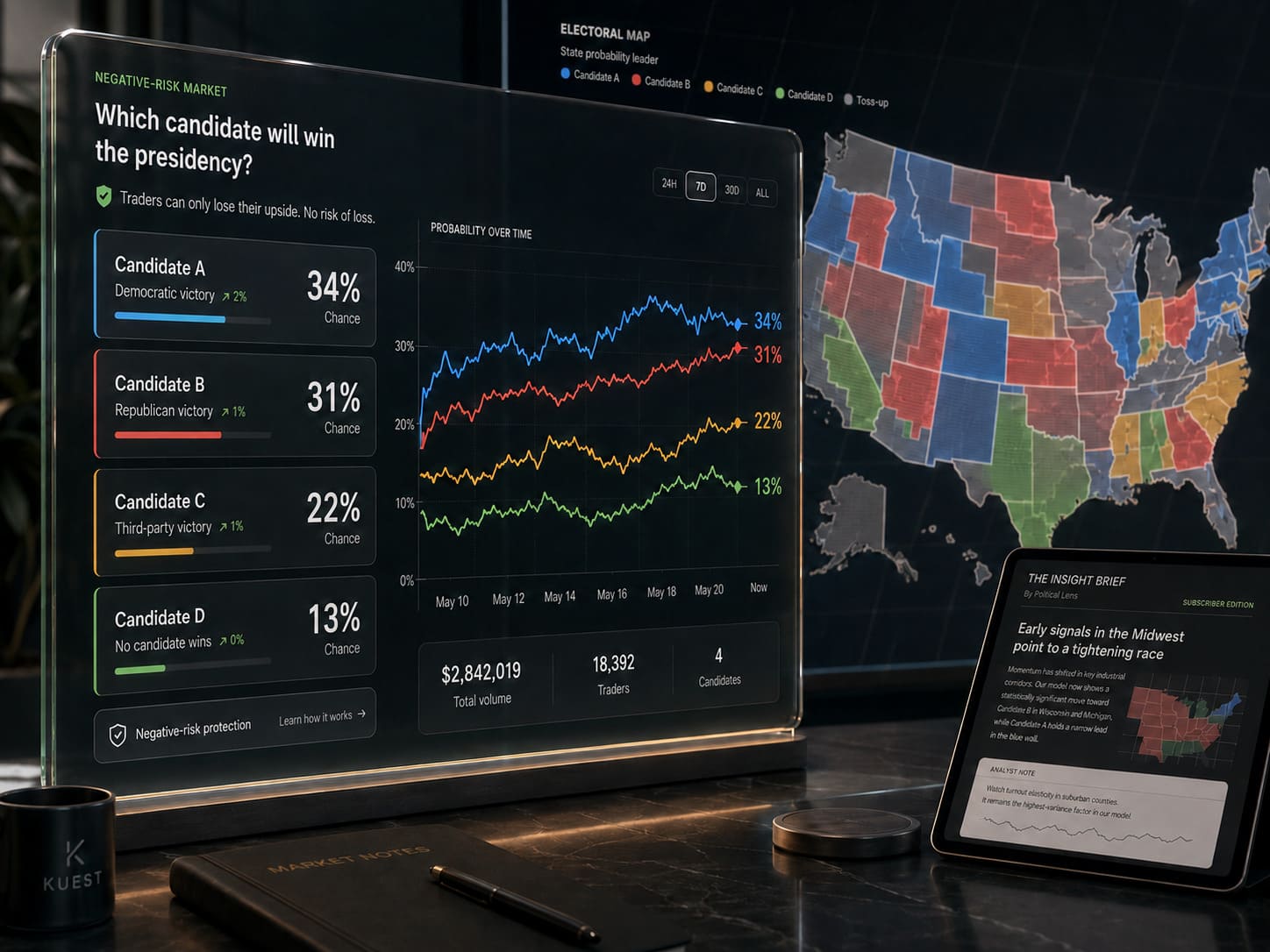
How Political Newsletters and Pundits Can Launch Election Prediction Markets
For political newsletters and pundits: launch an election prediction market, monetize seasonal traffic, and build a branded political market platform.
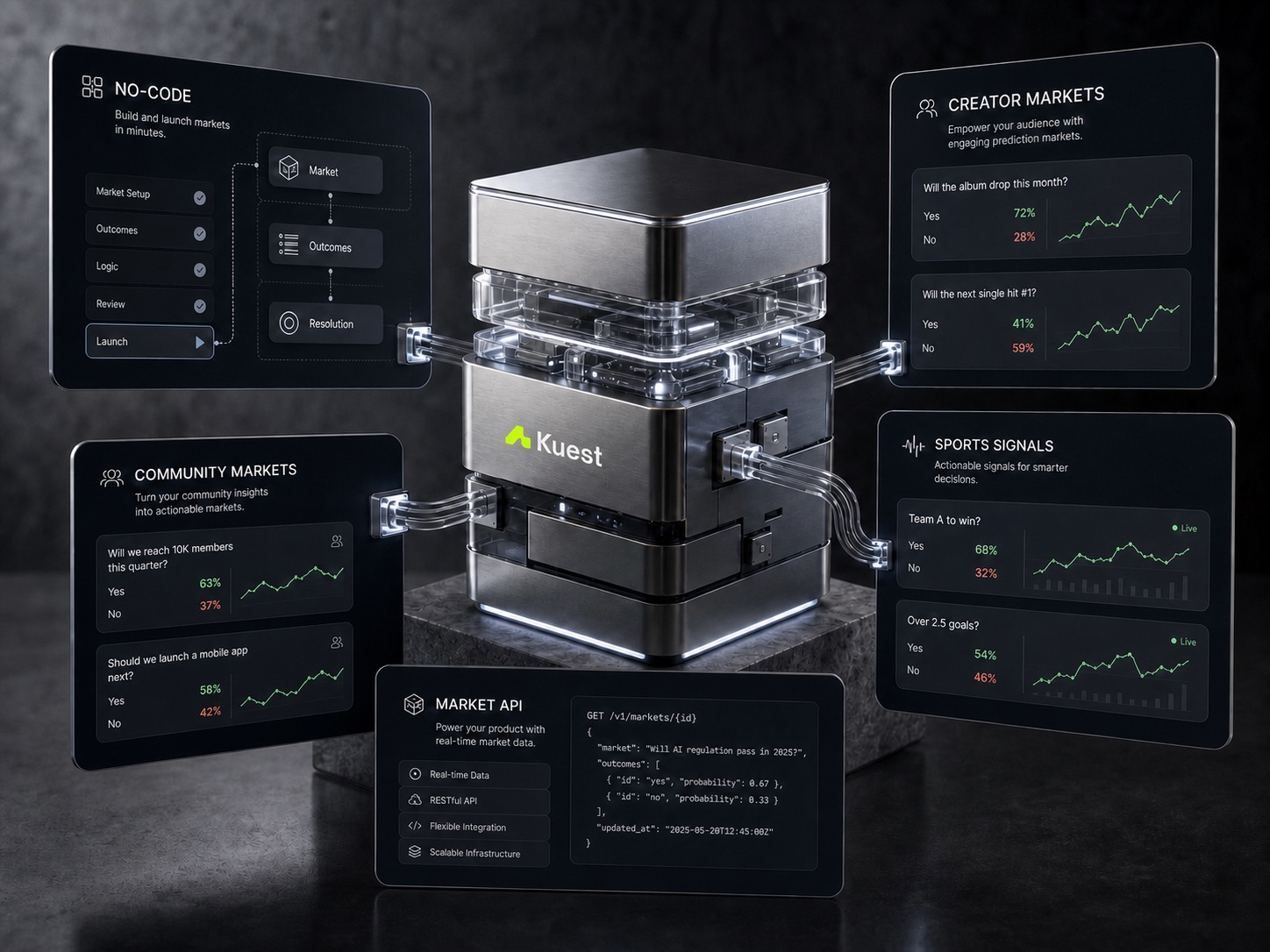
No-Code Blockchain Business Ideas: Launch a Prediction Market Without Hiring Developers
No-code blockchain business ideas for founders: launch a branded prediction market and build a crypto business without hiring developers.

Prediction Market for Sports Media: How Betting-Adjacent Content Sites Add a Revenue Layer Without a Gambling License
For sports media sites: launch a branded sports prediction market platform as a sportsbook alternative no gambling license, with compliance still explicit.